Vaibhav Sooryavanshi Dismantles RCB With a Historic Powerplay Assault
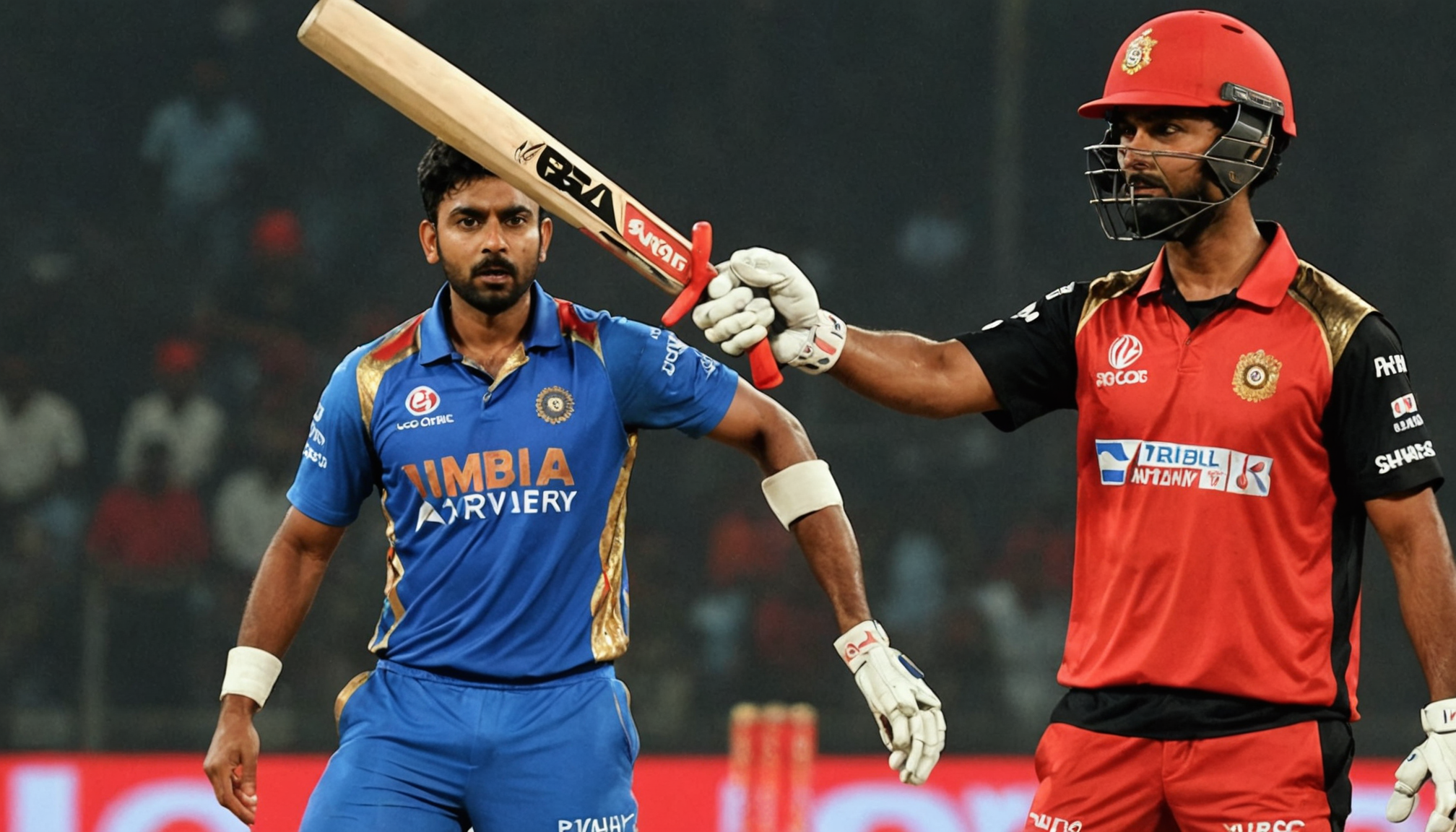
A 14-year-old from Saharsa, Bihar, rewrote the evening of April 11, 2026, with 78 runs off 26 deliveries — an innings so precise in its violence that it rendered a 201-run total effectively inconsequential before the halfway point. Rajasthan Royals overhauled Royal Challengers Bengaluru's total with two overs to spare, winning by six wickets and handing RCB their first defeat of the 2026 Indian Premier League season. The result extended Rajasthan's unbeaten run to four consecutive fixtures.
The Powerplay That Decided Everything
Chasing 202, Rajasthan Royals reached 97 for one inside the first six overs — a figure that, in the context of a 20-over format requiring approximately 10 runs per over, effectively ended the contest before it had properly begun. Sooryavanshi and Dhruv Jurel combined for a 108-run partnership, with Jurel finishing unbeaten on 81. The arithmetic was relentless: by the time the powerplay restrictions lifted, the required run rate for the remaining overs had collapsed to something well within routine reach.
RCB captain Rajat Patidar offered no evasion in his post-result assessment. "The way their batters, especially Vaibhav, batted in the powerplay, I think that made a huge difference," he said. It was a candid acknowledgement that the outcome was shaped in those first six overs, not in the middle period or the final stages. Ravindra Jadeja, one of Indian cricket's most reliable finishers, came in and contributed an unbeaten 24 to seal the formality.
RCB's Recovery and Its Limits
RCB's own innings had followed a pattern of collapse and partial recovery. At 62 for four and then 94 for six, the evening appeared to be heading toward a modest total well short of 180. Patidar's 63 off 40 deliveries, combined with Venkatesh Iyer's unbeaten 29 off 15, dragged the total past 200 — a genuine achievement given the circumstances. Crossing 200 with six wickets already down requires both composure and calculated aggression, and the lower order delivered exactly that.
Yet 201 proved insufficient. Patidar framed the total as a positive signal — "from there, 202, I think that's a positive sign for us" — while also conceding there were significant lessons to absorb. That framing reflects a broader truth in high-scoring formats: a competitive total only holds its value when the opposition's opening phase is disrupted. Against Sooryavanshi's form in April 2026, no disruption came.
Sooryavanshi at 14: What Precocity at This Level Actually Means
Context matters here. Scoring at a strike rate above 300 — 78 from 26 deliveries represents a strike rate of exactly 300 — requires not only extraordinary reflexes but a specific psychological architecture: the capacity to treat a high-pressure, high-stakes environment as neutral ground. Most adults never develop that quality. Among teenagers performing on professional stages, it is exceptionally rare.
Sooryavanshi was born in 2011, making him among the youngest individuals ever to perform at this level of professional franchise cricket. His emergence follows a well-documented pattern in Indian cricket development, where the BCCI's age-group infrastructure — district academies, state under-19 pipelines, and national selection trials — has progressively compressed the timeline between identification and elite exposure. What was once a decade-long journey from junior cricket to senior professional competition has, for a specific cohort of gifted players, narrowed to a matter of years.
The risk calculus is not trivial. Sports medicine and adolescent development research consistently flags the physical and psychological pressures associated with elite exposure at very young ages. Sustained media attention, performance expectation, and the physical demands of professional schedules can generate outcomes that diverge sharply depending on the support structures around a young individual. That Sooryavanshi is performing at this level is extraordinary. Whether those structures exist in sufficient depth around him is a question the coming seasons will answer more completely than any single evening can.
The Broader Picture: A Season Taking Shape
Four consecutive victories place Rajasthan Royals in a commanding position as the 2026 edition moves into its middle phase. RCB, despite their first defeat, demonstrated the capacity to build substantial totals even from precarious positions — a quality that will serve them through a long campaign. Patidar's explicit acknowledgement of "a lot of learnings" suggests a leadership group that processes adversity analytically rather than defensively.
What April 11 established most clearly is that the 2026 season has a defining individual narrative already in motion. Sooryavanshi's evening was not a curiosity or a statistical outlier — it was a demonstration of a rare and fully formed destructive capacity, operating without the hesitation that typically accompanies youth. For the competition, that is both a compelling storyline and a tactical problem that no opposition has yet solved.